Optimizing Inference Costs: Choosing Between Edge GPUs and Cloud-Based Rendering Solutions
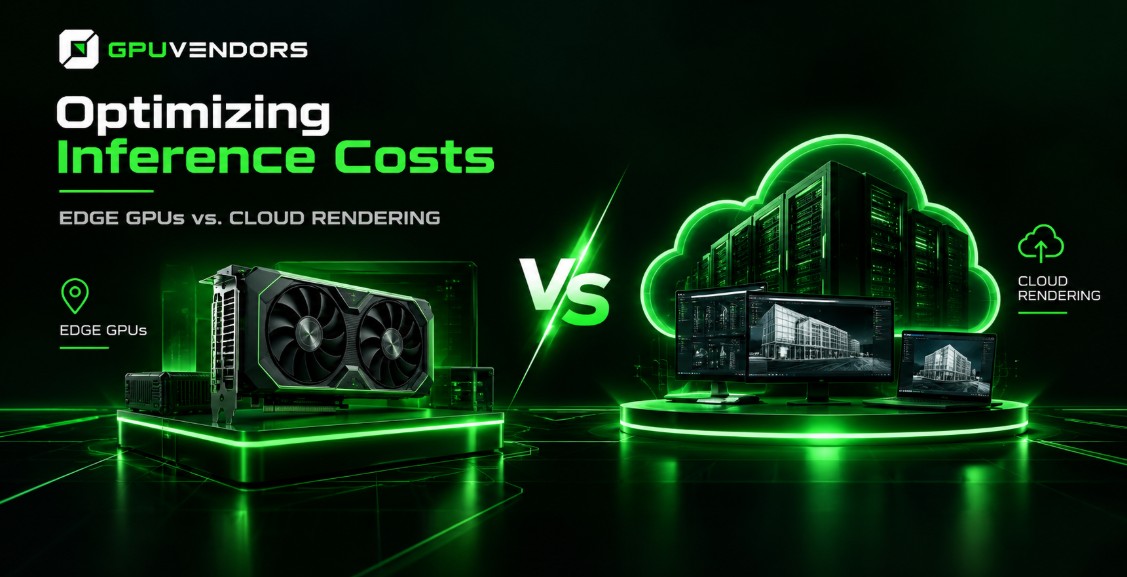
The rapid expansion of artificial intelligence, high-performance computing, and real-time graphics rendering has placed massive financial pressure on modern organizations. As deployment scales from experimental sandboxes to enterprise production environments, controlling operational expenditure becomes critical. Engineering teams face a difficult balancing act between maintaining ultra-low latency at the user edge and leveraging the massive elastic scaling power of centralized cloud infrastructure. Making the right architectural choice directly dictates your bottom line and long-term infrastructure scalability.
Understanding the Inference Cost Dilemma
When deploying modern AI models and heavy graphics rendering pipelines, computing expenses are divided into two main categories: initial capital investments and ongoing operational costs. Processing workloads at the physical edge offers unmatched responsiveness because data travels shorter distances, eliminating network transit delays. However, maintaining physical hardware requires specialized facilities, dedicated cooling, and upfront procurement costs.
Conversely, relying entirely on remote data centers shifts the burden away from physical maintenance. It allows businesses to spin up massive compute clusters on demand. Yet, sustained cloud usage introduces unpredictable billing spikes, data egress fees, and potential bandwidth bottlenecks. Finding the right hybrid balance requires a careful analysis of workload predictability, latency tolerance, and financial constraints.
The Role of Edge GPUs in Real-Time Processing
Edge computing places processing power closer to the data source, whether that involves local workstations, IoT devices, or regional micro-data centers. For applications requiring instant decision-making, such as autonomous driving sensors, real-time video analytics, and interactive local rendering, edge processing is indispensable.
By executing inference locally, organizations bypass the latency inherent in sending heavy data packets back and forth to a distant cloud server. Furthermore, edge solutions provide enhanced data privacy because sensitive information does not need to leave the local network. However, scaling edge infrastructure can become financially burdensome when demand fluctuates wildly, as physical hardware must be provisioned to handle peak loads rather than average utilization.
Evaluating Cloud-Based Rendering and Scalability
Cloud-based infrastructure shines when workloads are unpredictable, intermittent, or computationally overwhelming for local devices. Centralized cloud rendering platforms allow teams to tap into virtually unlimited GPU clusters, rendering complex 3D scenes or running massive large language model inference tasks concurrently.
This elasticity ensures that businesses only pay for the exact compute time they consume, avoiding the idle costs associated with underutilized physical hardware. To better understand how these recurring expenses compare against owning physical hardware, teams often use a Calculate GPU rental vs purchase cost framework to project long-term financial commitments accurately. While cloud rendering offers supreme flexibility, sustained high-volume inference can quickly accumulate prohibitive hourly fees, making cost-per-inference optimization a top priority for system architects.
Bridging the Gap Through Strategic Procurement
Optimizing your infrastructure strategy goes beyond merely selecting between edge and cloud deployment. It requires a holistic view of how compute demand evolves over time. Industry shifts highlight that modern enterprises must constantly re-evaluate their hardware pipelines to avoid operational bloat. For further insights into how compute demands are shifting across sectors, read more about The Shift to Operational Inference: What Enterprise IT Teams Need to Know About Compute Demand Shifts.
Securing reliable hardware at competitive price points remains the cornerstone of any successful inference cost reduction strategy. Whether you are looking to acquire dedicated server nodes or secure short-term rental capacity, sourcing your equipment through the best gpu marketplace ensures transparent pricing, verified vendor reliability, and access to the exact performance tiers your workloads demand.
Conclusion and Future Outlook
Balancing edge GPUs and cloud-based rendering solutions is not an all-or-nothing proposition. Modern high-performance computing architectures frequently adopt hybrid models, utilizing edge devices for low-latency, mission-critical tasks while offloading heavy batch rendering and massive model training to elastic cloud servers. By carefully evaluating your latency requirements, auditing your workflow predictability, and acquiring hardware through trusted channels, your organization can successfully minimize inference costs and build a resilient infrastructure for the future.